MBA Admissions Consulting – for folks who refuse to be average.
Your potential isn’t fixed. Let’s stretch it.
Reaching your limit? Please. That’s for quitters and people who like Calculus. We’re here to rewire your ambition.
Why Choose Admissionado to Be
Your MBA Admissions Consultant Prom Date?
Thank you for asking.
Where do Admissionado
MBA clients get accepted?
All of the places.
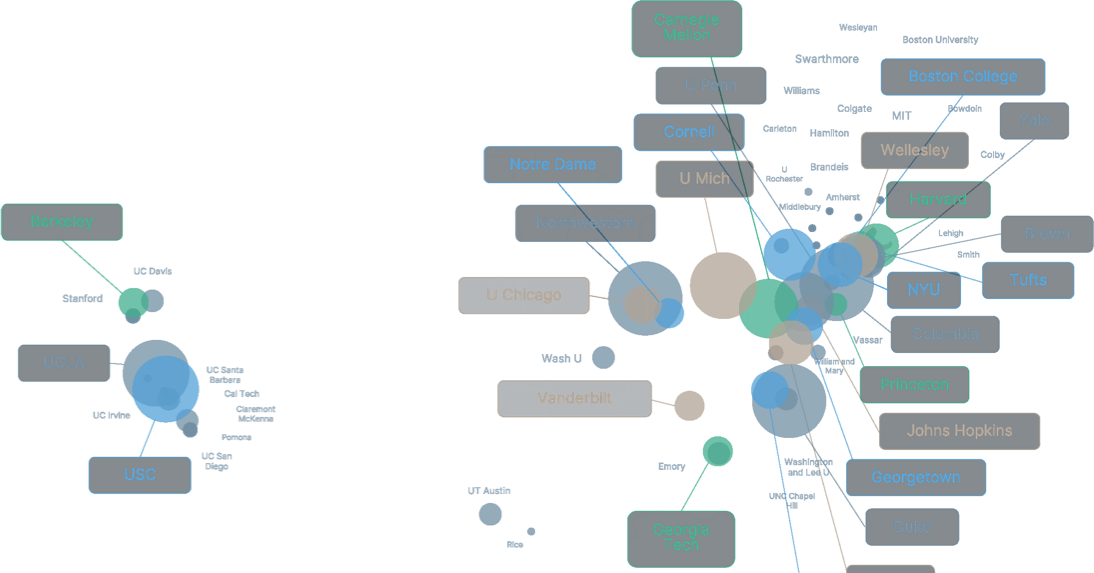
Top business schools we help you get admitted to.
School acceptance vs Admissionado acceptance.
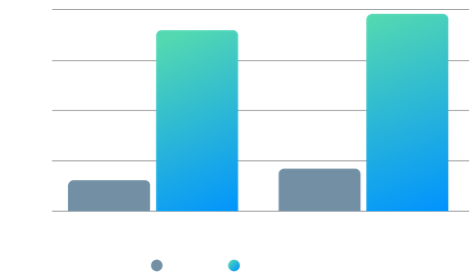
5.3x
chance of acceptance
with Admissionado

Tested and refined over decades.
Diagnosis
01The Work
02Polish
03


See the Truth
Before we build, we diagnose. We dive deep to understand your story, strengths, and ambitions—so we can craft a strategy that’s custom-fit for you.
Build the Machine.
Strategy means nothing without execution. We refine, rework, and reinforce your story until it’s bulletproof. No shortcuts. Just smart, relentless iteration.
Make it Sparkle
The difference between good and exceptional? Details. We fine-tune every word, every angle, every nuance—until your application doesn’t just compete—it dominates.
MBA Application Consulting Services
If You’re Applying Now
The days you’ve lived? Set in stone. The days ahead? Wide open. Your career and resume are locked, but your application—that’s the story we get to shape. This is where we mold the narrative, sharpen your strategy, and make sure schools don’t just see what you’ve done, but what you’re about to do.
Select Plan Type
Strategy
Learn MoreEssays
Learn MorePeripherals
Learn MoreFancy Stuff
Learn MoreEmail Support
Learn MorePhone Support
Learn MoreMBA Consulting Services – Advanced Planning
If You’re 1 or More Years Away From Applying to Business School
Your future MBA admit starts now. The smartest candidates don’t wait—they build, optimize, and position themselves strategically long before they apply. Let’s make sure that when the time comes, your future application-self is undeniable.
Select Plan Type
Strategy
Learn MoreMentorship Engagement
hours
CounterCheck™ Background Verification
Our CounterCheck™ verification support service helps you navigate the confusing, and often intimidating, process of providing any required documentation and winning approval from verification agencies
30-Minute Consult
Learn MoreBasic Service
Learn MoreExpanded Service
Learn MoreComprehensive Service
Learn MoreA La Carte Services & Add-Ons
Purchase what you need, at your own pace, and on your own terms. We have a deep bench of A La Carte options for you to choose from.
Discovery & Competitive Edge Positioning
Learn MoreThe M7 Insider Audit™
Learn MoreBlind 2nd Consultant Peer Review
Learn MoreResume Development
Learn MoreLetters of Recommendation Support
Learn MoreInterview Prep (Standard)
Learn MoreInterview Prep (Premium)
Learn MoreWaitlist Support
Learn MoreGut Check / Ding Analysis
Learn MoreHBS and Post-Reflection Interview
Learn MoreTeam-Based Decision Interview Prep
Learn MoreGMAT/GRE Hourly Tutoring
Learn MoreConsulting Career Advisory (CCA) Support
Learn MoreHourly Support
Learn MoreWe tailor a package for you. You can select what services you want and how many schools.
Choose Your Path


Is this worth your time?
Does partnering with an admissions consulting firm make sense for you?
I want to learn how to bring out my very best from a no nonsense but encouraging coach.
I am here because I believe that someone with better access to the competitive landscape can offer valuable perspective on what my true strengths and weaknesses are.
I have lofty ambitions, I understand the competition is fierce, and I’d like to leave nothing to chance.
I like the idea of having several folks looking at my applications, I’d love to add a professional’s insights to the mix, but I’ll keep going to solicit more and more opinions, because I’m really thorough!
I want someone to guarantee that they can help me get into my dream schools.
I’m paying a lot of money, I expect the firm or consultant I hire (who works for ME now!) to do much of the legwork. I’ll provide guidance, but it’s on YOU to tell me what to do, and when, and to keep me on track!
FAQs
Common questions about us, the process, and much more.
Reapply to the same MBA program if you can prove, on paper, that you’re a different bet than you were last cycle; cut your losses if you can’t, or if you only want a do-over because rejection bruised your ego. The diagnostic is simple: can you name three concrete changes since you applied that an adcom would actually care about (role scope, leadership, measurable impact, clearer goals, better test score, stronger recommendations, tighter school fit), and can you point to where those changes will show up in your materials. If your update is basically “I reflected a lot” or “I like the school even more,” don’t reapply yet. Also, if you were waitlisted and got specific feedback or signals, that’s often a green light to come back with receipts; if you were denied with no traction and your profile hasn’t moved, you’re just paying another entry fee to the same table.
You’re not choosing between “this school” and “other schools”; you’re choosing between two strategies: doubling down with a sharper value proposition or widening the funnel with better market fit. Think like an investor: your application is a portfolio, and a reapp is only smart if the risk profile has changed, not just the hope. Try this mirror test: write the one-sentence reason the program should admit you now, then write the one-sentence reason they said no last time. If those two sentences don’t collide head-on, you’re not reapplying, you’re rerunning. Do the work, then choose the table where your chips actually play.
Reapplicants don’t start at a disadvantage if you give schools new evidence, not new adjectives. Adcoms aren’t offended you came back; they’re allergic to reruns. If your reapp is basically “same candidate, slightly better-written essays,” you’re behind, because you’ve asked them to change their mind without changing the facts on the ground. But if you’ve upgraded the inputs since last time, the opposite happens: you’re easier to admit because you’re a known quantity with a credible trajectory. The move is to treat the reapp like a product relaunch: keep what’s working, fix what’s broken, and prove the fix with receipts.
Your diagnostic is brutal and simple: what can you point to that didn’t exist when they last evaluated you, and would matter to a skeptical operator? Think promotion, expanded scope, quantified impact, a sharper post-MBA plan with real market contact, a test score shift, or a recommender who can now tell a different story because you’ve earned new trust. If you can’t answer that, you’re not “reapplying,” you’re resubmitting. Also: don’t confuse emotional closure with strategic progress. You may feel more ready; they need to see you’re more ready. Build your reapp around delta, not diligence, and you stop being the person who “didn’t get in” and become the person who got better on purpose.
None of these “wins” in the abstract; the winner is the one that best matches your risk profile, your story, and how much signaling you actually need. If you’re a true early-career outlier who can show unusual impact now (not just promise later), Stanford Deferred can be lethal because it’s so small and so picky. If you’re a high-performing, more classic candidate who benefits from brand certainty and a bigger target, HBS 2+2 is often the more realistic swing, with a massive alumni and recruiting halo once you arrive. Wharton Moelis is different: it’s a defined pipeline with a defined vibe, and it “wins” when your trajectory screams finance/markets and you want structure more than ambiguity. The trap is treating them like interchangeable trophies when they’re really three different bets.
Run this quick diagnostic: if you got rejected everywhere tomorrow, which version of you would still feel honest? The “I’ve already done rare things and I’m weirdly specific” version (Stanford), the “I’ve led, delivered, and can scale” version (HBS), or the “I’m building technical depth and a finance platform” version (Wharton Moelis). Then pressure-test your evidence, not your dreams: can you point to two moments where you changed an outcome, not just participated in one? Also, watch your failure mode: if you over-index on prestige, you’ll write vague essays and lose; if you over-index on fit, you’ll sound small and safe. Pick the program whose selection logic you can satisfy with proof. Prestige is the receipt, not the purchase.
Yes, deferred MBA programs can work for international students, but only if you treat them like a two-part deal: admission now and a realistic path to enrollment later. Schools will admit international candidates all day if the profile is strong; what they won’t do is ignore the friction points you might be quietly hoping solve themselves: visas, geography, and whether your post-college job actually creates MBA-ready leadership reps. The programs “work” when your plan for the 2-5 years before matriculation is credible across borders and makes you more valuable, not just older.
The principle is simple: deferred MBA is a bet on trajectory, and international applicants get judged on whether their trajectory is portable. Run this diagnostic: if you had to stay in your home country for the entire deferral period, would your next role still produce the same caliber of impact, recommendations, and progression, and would you still want the same MBA for the same reason? If the answer’s no, your application is really a Hail Mary for optionality, and adcoms can smell that. If the answer’s yes, you can turn “international” into an asset by showing you’ve already operated across cultures, markets, or regulatory constraints and will show up on campus with sharper pattern recognition than the average consultant-in-training. You’re not asking for a favor; you’re offering a future dividend.
Apply deferred if you can already prove trajectory and leadership without the MBA, and you want to lock in a top option while your story is clean and easy to underwrite. That means you can point to real impact (not just “I was busy”), you have crisp post-college plans, and your recommenders can testify you drive outcomes, not attendance. Skip deferred and go get work experience first if you’re still shopping for an identity, your internships were fine-but-forgettable, or your goals read like “consulting, maybe product, maybe impact, TBD.” Quick self-check: if you can’t answer “Why MBA later?” in one sentence that a skeptical operator would respect, you’re not ready for deferred.
The decision isn’t “apply now vs later,” it’s “buy an option now vs build a better asset first.” Deferred is like a reservation at a hard-to-get restaurant: valuable if you know you’ll want the table, pointless if you’re not even sure you’re hungry. Evaluate it as a portfolio move across risk, upside, and story coherence: does deferred reduce your anxiety, or reduce your discipline to chase hard roles and growth? If you tend to over-plan and play safe, deferred can become a psychological permission slip to coast. If you tend to sprint, take big swings, and forget to market yourself, deferred can be a stabilizer that lets you choose bolder early jobs. You’re not choosing a program format; you’re choosing what kind of pressure you’re going to put on yourself for the next three years.
Yes, you can ask Wharton to reconsider scholarship using a Booth offer, but don’t expect a back-and-forth negotiation like you’re haggling over a car. If you have a materially better Booth package (bigger award, clearer fellowship, or meaningful differences in total cost) and you’re genuinely open to Booth, it’s worth making a concise, professional request. If the Booth money is marginal, your Wharton story is “Wharton or bust,” or you’re past their reconsideration window, pushing hard usually buys you nothing and can make you look tone-deaf. Quick diagnostics: is the dollar gap big enough to change your decision; can you say, truthfully, “I will attend Wharton if you can close X”; and do you have the offer letter with terms spelled out (not vibes, not rumors, not your friend in cluster)?
Most applicants frame this as “Can I leverage Booth to get more Wharton money?” That’s the wrong game. Schools don’t reward leverage; they respond to yield risk and fairness. Your job is to present a credible choice-set and a clean decision rule: “With current awards, Booth is financially compelling; with an additional $Y at Wharton, Wharton becomes the rational pick.” Then sanity-check the portfolio: your post-MBA industry, debt tolerance, partner income, and the opportunity cost of extra loans. If you tend to overplay your hand, keep it short and factual; if you tend to undersell, be explicit about the decision point. You’re not negotiating status, you’re negotiating the gap between “dream” and “math.”
Full Transparency
If we’re not the right fit for you, we’ll let you know.
#Humble Brag
Take a look at our case studies, and see if you can start discovering the winning patterns connecting all successful candidates!
Learn MoreThe IMPACT Tool
Check out the theory behind our unique approach to distilling MBA admissions to these six profile features.
Learn More
FAQs
Questions about our approach to MBA admissions consulting.
It starts well before anyone touches an essay. Every engagement opens with a detailed questionnaire designed to surface the raw material — professional history, leadership experiences, personal context, goals, and our IMPACT™ rubric, which maps you against the six behavioral dimensions elite business schools actually select for: Influence, Management, Passion, Awareness, Creativity, and Teamwork. Your consultant reviews all of this in advance, forming hypotheses and identifying the threads worth pulling before a minute of live time together.
That work feeds into the kickoff strategy call, which represents the single most important block of time in the entire engagement. This isn’t a friendly get-to-know-you. It’s a deep excavation. We test narrative hypotheses live, probe for positioning angles you haven’t considered, and pressure-test which combinations of experiences, motivations, and differentiators actually produce a candidacy that stands apart. We’re also benchmarking competitiveness using our Echelon model — mapping where you realistically sit across tiers of schools — and beginning to shape the strategic logic that will guide every downstream decision.
All of that gets synthesized into an Action Plan: a strategic document that captures your brand positioning, competitive benchmarking, essay pre-flight guidance, and a working timeline. Think of it as the architectural blueprint that keeps strategy tethered to a clear end goal.
Then comes execution. Essays move through our Exhaustive Iterative Drafting Process — typically four intense back-and-forths. Early drafts are intentionally raw; we want the unfiltered version, not the rehearsed professional voice. Over successive rounds, we locate the core of the story, build structure, refine the argument, and polish to submission-ready. Your lead consultant provides strategic direction throughout while a dedicated essay specialist works at the sentence level — two expert perspectives fused into unified feedback at every round. Depending on your tier, this may also include resume strategy, letters of recommendation guidance, interview preparation, post-decision support, and waitlist strategy.
The system is designed so that by the time you submit, you’re not just hoping the application works. You know why it works — because every element was built against a coherent strategy, not assembled piecemeal under deadline pressure.
Both — with one clear point of accountability.
Every candidate is paired with a lead consultant who owns the relationship, the strategy, and the positioning from kickoff through decision day. That person is your quarterback. You’re not bouncing between voices or reconciling conflicting opinions about who you are and what your application should say.
Behind the scenes, your consultant works closely with a dedicated essay specialist who focuses on writing at the sentence level. We separate these roles deliberately. By splitting strategy and execution, you get depth on both: strategic thinking that isn’t diluted by line edits, and writing craft that isn’t compromised by someone trying to hold the entire arc in their head at once.
Your primary interaction is always with your lead consultant. The essay specialist’s work happens in concert with that direction, not independently. You won’t receive conflicting feedback or feel like you’re managing multiple relationships. It’s one unified vision, executed by a coordinated team.
For Platinum engagements, additional perspectives enter at specific, high-leverage moments — the M7 Insider Audit™, the Admissions Committee Simulator, blind peer review — but the lead consultant integrates all of it into a single, coherent direction. More signal, not more noise.
The short answer is chemistry — because in our experience, that’s what most reliably drives outcomes.
Matching based on industry background or target schools can make sense for a younger firm with less experienced consultants. At our level, it matters far less. Every consultant on our roster knows the schools, the industries, and the cases cold. What varies isn’t expertise; it’s working style. The question isn’t “who knows your background,” but “who will think best with you.”
We’ve gotten very good at that matchmaking. We look at communication style, temperament, intensity, and how you’re likely to engage in a high-stakes, iterative process. When the fit is right, everything moves faster and sharper.
We’re confident making those calls because of how we hire. Our screening process is blind — we evaluate work product with no résumé attached — and roughly 5–6% of applicants make it through. The result is a roster where every consultant clears what we call the VIP bar: we could assign any one of them, sight unseen, to the highest-stakes engagement we’ve ever taken on and feel completely comfortable. That’s not aspirational language. It’s the standard we enforce.
Our standard turnaround is 72 hours from the time a draft lands in our inbox. That applies to every round of the Exhaustive Iterative Drafting Process — from the first raw pass through final polish.
In practice, it’s often faster. But we quote 72 hours deliberately. We’d rather set a realistic expectation and overdeliver than promise a flashy 24-hour turnaround and return feedback that hasn’t had time to do its job. Speed without insight is noise. A rushed edit that misses the structural problem in paragraph two isn’t fast — it’s a wasted round.
Here’s what’s actually happening inside that window. Your lead consultant reads the draft at altitude — usually soon after it arrives — evaluating it the way an admissions reader would: what’s landing, what’s missing, and where the argument needs to go. That strategic guidance is then handed to the essay specialist, whose job is to go deep: line by line, sentence by sentence, tightening logic, refining voice, and pushing execution to match the strategy. By the time the draft comes back to you, you’re seeing two expert perspectives fused into a single, unified set of feedback. That collaboration is the point — and it’s not something you want rushed.
One practical note: turnaround speed is partly in your hands. Momentum compounds. When drafts come in consistently, the process flows. When weeks pass between rounds, quality doesn’t drop — but timelines compress later, creating pressure no one enjoys. The candidates who get the most out of us tend to match our pace.
Yes — all of them. Every background, every profile type, every competitive starting position.
This is one of the biggest differences between us and many of the firms that market themselves as “the best.” We work with MBB consultants targeting only M7 and first-generation professionals who’ve never set foot on a business school campus. Candidates with 780 GMATs who need help telling a story that isn’t forgettable, and candidates with sub-700 scores who need a very different, careful, and intelligent frame. Career changers. Military officers. Entrepreneurs. International applicants navigating a system built around assumptions that don’t apply to them.
We don’t cherry-pick clients to protect a marketing statistic. That’s worth saying plainly, because it’s common in this industry and almost never acknowledged. When a firm quietly turns away candidates with real risk and then advertises pristine success rates, that number isn’t measuring consulting quality — it’s measuring intake selectivity. When you have the skills to do this work well, you don’t need to screen for safety.
That said, we’re honest about what’s realistic. If your target list is misaligned with your current profile, we’ll say so — not to cap ambition, but to ground the strategy. Our job isn’t to co-sign fantasy lists; it’s to build smart portfolios with real reaches, credible targets, and well-chosen safeties. Sometimes the most valuable thing we do is tell you the truth you’re not hearing elsewhere.
The candidates who thrive with us tend to share one trait that has nothing to do with stats or pedigree: they’re coachable. They engage, they reflect, and they’re willing to be pushed past what’s comfortable. If that’s you, the rest is our job.
Earlier than feels urgent — and almost certainly earlier than you think you need to.
The single strongest pattern we’ve observed across thousands of MBA candidates and nearly two decades is this: earlier engagement produces strong outcomes. Not marginally. Meaningfully. And the reasons are mechanical, not philosophical.
A candidate who engages six months before R1 has time to do the foundational work properly — IMPACT™ diagnostic, competitive benchmarking, brand positioning, essay pre-flight — without the entire process collapsing into a panicked sprint. They test narrative hypotheses. They iterate. They make strategic decisions about the school list with real data, not gut instinct under pressure. By the time drafting begins, they’re not inventing a story. The story already exists because they thought it through with direction.
For Advanced Planning candidates — those a year or more out — the leverage is even greater. You have time to shape the inputs: strengthen leadership experiences, close résumé gaps, retake tests strategically, build the profile that makes the eventual application argument self-evident rather than forced.
For application clients, spring or early summer before your target round is the sweet spot. It allows time for discovery, iteration, and thoughtful execution. By late summer for R1, we can still add real value — but the runway is shorter and options narrow. By September, we’re in triage mode. We’ll tell you what’s achievable and what isn’t, because pretending otherwise helps no one.
One constraint that catches people off guard: consultant capacity is finite and fills predictably. We don’t overload rosters, because overloaded consultants do worse work. Candidates who wait until August aren’t choosing between equal options — they’re choosing from what’s left. The consultation call is free and commits you to nothing. If you’re weighing the decision, having the conversation earlier expands your choices. Waiting never does.
Virtually all of them — across every tier and every major geography.
Our clients have earned admission to Harvard Business School, Stanford GSB, Wharton, Booth, Kellogg, Columbia, MIT Sloan, Tuck, Yale SOM, Ross, Fuqua, Darden, Stern, Anderson, Haas, and dozens of other programs worldwide. That includes INSEAD, London Business School, and other leading international schools.
But a list of school names — however impressive — doesn’t tell you what actually matters. What matters is which of those admits had unrealized potential or steep hurdles before they came to us, and how much did we help them? Like the sub-700 GMAT who landed at a top-ten program. The career changer with no traditional business background who got into Booth. The reapplicant who was rejected everywhere the first cycle and came back to earn multiple M7 admits.
Those outcomes aren’t produced by brand association or access to a secret playbook. They’re produced by diagnostic precision, strategic clarity, and the kind of essay work that makes an admissions reader lean forward instead of reaching for the next file.
We don’t publish success rates designed to impress — we’ve spoken plainly about why that metric is misleading when firms pre-screen for safety. What we will tell you is that our track record is built across the full spectrum of candidates, including many that other firms would decline. If you want specifics, ask us on the consultation call. We’d rather give you real context than a curated highlight reel.
We use what we call the Echelon approach, and it reframes how most candidates think about school selection.
Forget precise rankings. The difference between the school ranked #5 and the one ranked #9 is largely meaningless in terms of career outcomes. What matters is the tier — or echelon. Within any given echelon, schools are functionally equivalent in reputation, network strength, and recruiting power. HBS, Stanford GSB, and Wharton sit in one echelon. Booth, Kellogg, Columbia, and MIT Sloan sit in another. Both are excellent. The distinction between echelons can be real, under very specific pressure tests; the distinctions within them are mostly noise.
This reframing does something powerful: it simplifies the most anxiety-producing decision in the process. When decisions arrive, the logic is clean. Identify the highest echelon where you hold at least one admit. If you have multiple offers within that echelon, you can’t make a bad choice — pick based on culture, location, industry strength, financial aid, or gut instinct. The echelon has already done the heavy lifting.
Working backward from that principle, we benchmark where your match level sits — the highest echelon where admission odds are meaningfully favorable. One level below becomes safety territory. One level above is the first reach tier. From there, we build the portfolio: protect the floor, load the middle, and reach as high as ambition and profile justify.
Most candidates end up applying to somewhere between four and eight programs. That’s not a rule — it’s a pattern that emerges when the strategy is built correctly. Enough to protect the downside and leave room to swing for the fences. Fewer than college applicants, because MBA applications are heavier — each school demands real, school-specific strategic thinking, not recycled answers with the name swapped.
We deliberately spend the most time on the hardest schools on the list — even though doing so puts our own success metrics at risk. We’d rather compete on the difficult cases than pad numbers with programs you didn’t need our help to get into.
IMPACT™ stands for Influence, Management, Passion, Awareness, Creativity, and Teamwork. It’s our proprietary diagnostic framework for identifying the traits elite business school admissions committees are actually selecting for — whether or not they describe them in these terms.
The core insight is simple. Schools don’t admit candidates because they scored a 760 or got promoted at McKinsey. Those are surface markers — proxies meant to signal something deeper. What admissions committees are really asking, often implicitly, is: will this person end up in the winner’s circle five, ten, fifteen years from now? And if so, will our institution get credit for it?
The traits that predict that outcome aren’t résumé lines. They’re behavioral patterns. Can this candidate influence others without relying on authority? Can they manage complexity under real constraints? Is there genuine fire — passion deep enough to survive the inevitable moments where quitting is easier? Do they reflect honestly on what went wrong, not just what went right? Can they think laterally when the playbook fails? And can they function inside a team when compromise is hard and egos are real?
We score candidates across all six dimensions using qualitative and quantitative inputs from the questionnaire and the kickoff strategy call. The results reveal where you’re naturally strong and where gaps exist — and from there, we build strategy in two directions. Double Down means building a cohesive identity around existing strengths. Shore Up means finding experiences or framing that reinforce weaker dimensions before the committee notices them first.
The leverage shows up most clearly in essay strategy. If a profile reads as operationally brilliant but risk-averse, we don’t hope the committee overlooks it — we select essay topics and approaches that demonstrate real risk-taking, reshaping the reader’s impression before it calcifies. The same logic extends to résumé framing, recommender selection, and interview preparation.
IMPACT™ is designed to become invisible. Like any good framework, its value is in building clarity and shared language early — organizing the chaos of a complex profile into a coherent argument. Once that work is done, the framework fades. But the thinking it produces is embedded in every decision, from first draft to final interview.