What’s the best college you can get into?
It’s time to stretch your potential.
‘Can you reach your limit’ is so… limiting. Be audacious. Think bigger. Be bolder. Let’s figure out how to get you beyond your so-called max.
Why Admissionado?
Glad you asked.
Our Admits
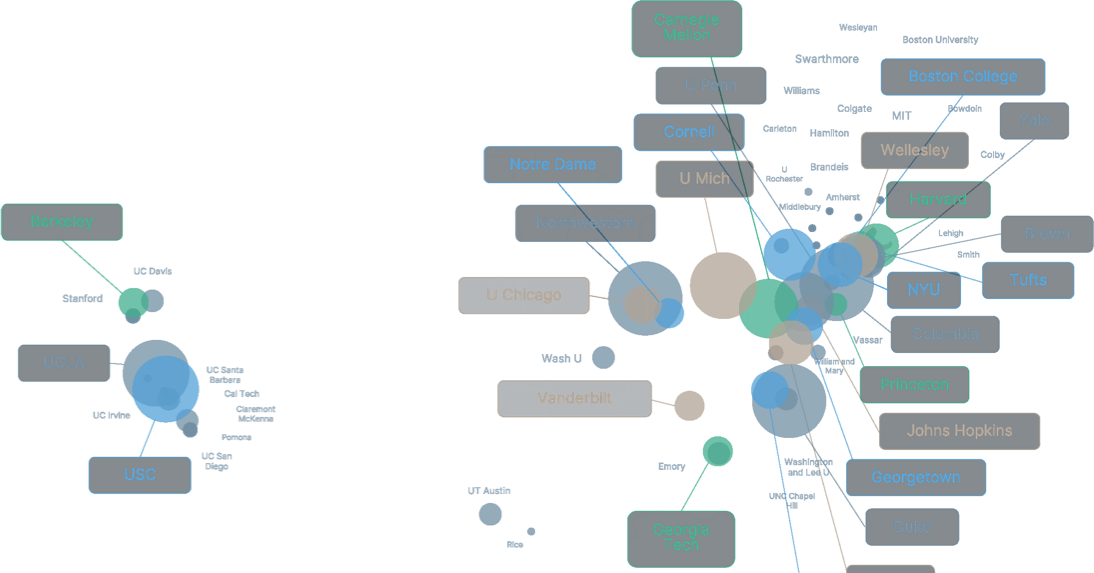
Top schools we help
you get in.
School acceptance vs Admissionado acceptance.
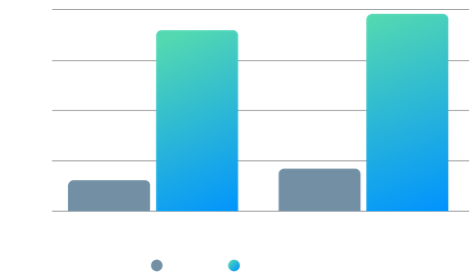
5.3x
chance of acceptance
with Admissionado
Tested and refined over decades.
Diagnosis
01The Work
02Polish
03


Assess Correctly
This is the ballgame, right here. Our main objective is to understand you – the individual – fully, in order to develop a custom-fit action plan designed to maximize YOUR unique potential.
Dig, Then Dig Deeper
Achieving perfection requires dogged determination to pursue it fearlessly and relentlessly. We spend time figuring out what needs doing, and then we start doing. Iterating, reworking, working it until it is strong.
Make it Sparkle
To nail the core messaging is to have achieved 95% of the ultimate goal. The remaining 5% can be the icing on the cake that elevates it to the next level. Finessed. Taut. Crisp.
College Mentorship Services
For Younger Students – Grades 9-11 or Younger
If the admissions decision is based on a snapshot of who you are in the first semester of your senior year, then the work you do in the preceding years is the most deterministic opportunity to advance your goals. Take full advantage, and sow needle-moving seeds early.
Select Plan Type
Strategy
Learn MoreMentorship Engagement
hours
College Application Services
For 2nd Semester Juniors and 1st Semester Seniors
The biggest challenge for students applying to the most competitive institutions is to determine which puzzle pieces, assembled in which particular arrangement, will combine to tell the most impressive application pitch.
Select Plan Type
Strategy
Learn MoreEssays
Learn MorePeripherals
Learn MoreFancy Stuff
Learn MoreEmail Support
Learn MorePhone Support
Learn MoreA La Carte Services & Add-Ons
Purchase what you need, at your own pace, and on your own terms. We have a deep bench of A La Carte options for you to choose from.
Discovery & Competitive Edge Positioning
Learn MoreThe Admissions Committee Simulator
Learn MoreThe Ivy League Insider Audit™
Learn MoreBenchmarking – Portfolio Approach (Standard)
Learn MoreBenchmarking – Portfolio Approach (Premium)
Learn MoreMain Essay Pre-Flight – Brainstorming, Topic Planning
Learn MoreThe Essay Development Cauldron – Iterative Drafting
Learn MoreLetters of Recommendation Support
Learn MoreInterview Prep (Standard, 2 Sessions)
Learn MoreInterview Prep (Premium, 2 Sessions plus Blind Interviewer)
Learn MoreOxbridge Interview Prep Premium (2 Sessions)
Learn MoreActivities List Review
Learn MoreApplication Review, High-Level Scan
Learn MoreWaitlist Support
Learn MoreHourly Support
Learn MoreEmail, Phone Support
Learn MoreSAT / ACT Tutoring (Hourly)
Learn MoreWe tailor a package for you. You can select what services you want and how many schools.
Choose Your Path


Is this worth your time?
Does partnering with an admissions consulting firm make sense for you?
I want my child to learn how to bring out their very best from a no nonsense but encouraging coach.
I understand that students who get into top colleges don’t need to be told to stay on target (these are table stakes). I am here because your firm has valuable experience and perspective to offer us that will fortify the work we are already planning to do.
I have lofty ambitions, I understand the competition is fierce, and I’d like to leave nothing to chance.
I’m paying a lot of money, I expect you to keep my child on task, it’s up to YOU.
I want guarantees that my child get accepted to a target program.
I like the idea of having several folks looking at my applications, I’d love to add a professional’s insights to the mix, but I’ll keep going to solicit more and more opinions, because I’m really thorough and as they say, the more the merrier!
Full Transparency
If we’re not the right fit for you, we’ll let you know.
Our Success Continues
#Humble Brag
Take a look at our case studies, and see if you can start discovering the winning patterns connecting all successful candidates!
Learn MoreAdmissionado Tool
The SPARC Quiz
Check out the theory behind our unique approach to distilling college admissions to five key profile features.
Learn More
FAQs
What we offer, how it works.
It starts before anyone touches an essay. Every engagement opens with a detailed questionnaire designed to surface the raw material — academic profile, extracurricular landscape, personality cues, and family context — before we spend a minute of live time together. Your consultant reviews this in advance, forming hypotheses and identifying the threads worth pulling.
That work feeds into the kickoff strategy call, which is arguably the most important hour of the entire engagement. This is a deep excavation. We’re not interested in the transcript version of the student; we’re interested in the version that makes an admissions reader lean forward. We test narrative hypotheses live, probe for stories the student doesn’t yet recognize as meaningful, and pressure-test which combinations of experiences, motivations, and traits actually produce a differentiated candidacy. We score the profile using our SPARC™ framework, benchmark competitiveness across tiers of schools, and begin shaping the strategic logic that will guide every decision that follows.
All of that gets synthesized into the Action Plan — a strategic document that captures positioning direction, benchmarking insights, essay pre-flight guidance (both topic and approach), and a working timeline. Think of it as the architectural blueprint that powers everything downstream.
Then comes execution. Essays move through an iterative, multi-round process we call the Cauldron. Early drafts are intentionally raw — we want the unfiltered version, not the polished performer. Over four to five increasingly focused rounds, we locate the core of the story, build structure, refine execution, and polish to submission-ready. Your lead consultant provides strategic direction throughout, while your essay specialist works at the sentence level. Depending on your service tier, we also cover activities list strategy, letters of recommendation guidance, interview preparation, and post-decision support, including waitlist strategy. When multiple offers arrive, we help with that decision too.
Mentorship begins the same way every time: with a strategic discovery session. This is a modular, front-loaded conversation designed to establish context — who the student is, where they’re starting, what matters, and what the long-term arc should look like. It’s about orienting correctly before moving forward.
From there, mentorship is intentionally hour-based. The emphasis is on high-leverage, live working time with the student — conversations where thinking is sharpened, decisions are clarified, and direction is set. We design it this way because the value in mentorship isn’t a consultant disappearing for weeks to generate artifacts; it’s what happens in the room. If a particular situation genuinely benefits from offline work or deeper prep, that’s absolutely possible — the key is aligning expectations up front and choosing the right level of engagement. We’ll help you make that call.
What we don’t do is confuse structure with progress. Fancy portals, constant reports, and overly engineered checklists can feel reassuring, but they’re often a crutch — more about optics than outcomes. Our bias is simple: invest time where it actually moves the needle. The right guidance, at the right moments, applied to the right decisions. If a progress report helps, we’ll produce one. If it doesn’t, we won’t burn time pretending it does.
This approach isn’t for everyone. Some families want visible activity for its own sake. We’re focused on results. We do the work that matters, in the way that works, and we’re comfortable letting the rest go.
Both — with one clear point of accountability. Every student is paired with a lead consultant who owns the relationship, the strategy, and the narrative direction from kickoff through decision day. That person is your quarterback. You’re not bouncing between voices or reconciling competing opinions about who you are and what your application should say.
Behind the scenes, your consultant works closely with a dedicated essay specialist who focuses on the writing at the sentence level. We separate these roles deliberately. Most firms ask one person to do everything, which usually means they’re excellent at one dimension and merely adequate at the other — or stretched thin by application number six. By splitting strategy and execution, you get depth on both: strategic thinking that isn’t diluted by line edits, and writing craft that isn’t compromised by someone trying to hold the entire arc in their head at once.
Your primary interaction is always with your lead consultant. The essay specialist’s work happens in concert with that direction, not independently. You won’t receive conflicting feedback or feel like you’re managing multiple relationships. It’s one unified vision, executed by a coordinated team.
When students begin with mentorship and later move into application support, our strong preference is continuity. Keeping the same consultant across years produces better work and builds real trust. If you know early that you’re aiming for a multi-year engagement, securing that continuity sooner also protects against consultant rosters filling up.
We look at several factors at once: the student’s background, personality, target schools, the specific strategic challenges in their profile, and — when families have preferences — any requests about who they’d like to work with. If a requested consultant is available, we’re happy to accommodate that.
That said, here’s what actually matters most. The strongest predictor of a great engagement isn’t where a consultant went to school or whether they’ve worked with a particular demographic. It’s whether the consultant is genuinely excellent at diagnosis and coaching — and whether there’s a natural working chemistry with the student. A brilliant strategist who doesn’t connect with a particular seventeen-year-old will produce worse outcomes than a slightly less experienced consultant who makes that student want to show up, think harder, and do the work.
We’re confident making these matches because of how we hire. Our screening process is blind — we evaluate work product with no résumé attached. About 5–6% of applicants make it through. The result is a roster where every consultant clears what we internally call the VIP bar: we could assign any one of them, sight unseen, to the highest-stakes client we’ve ever had and feel completely comfortable. That’s not aspirational language — it’s the standard we enforce.
So while we do optimize for fit, the honest truth is this: there’s no bad draw. The baseline is simply that high.
Our standard turnaround is 72 hours from the time a draft lands in our inbox. That applies to every round of the Cauldron — from the first rough pass through final polish.
In practice, it’s often faster. But we quote 72 hours deliberately. We’d rather set a realistic expectation and overdeliver than promise a flashy 24-hour turnaround and return feedback that hasn’t had time to do its job. Speed without insight isn’t efficiency; it’s noise. A rushed edit that misses the structural problem in paragraph two isn’t fast — it’s a wasted round.
Here’s what’s actually happening inside that window. Your lead consultant reads the draft at altitude, usually soon after it arrives, and evaluates it the way an admissions reader would: what’s landing, what’s missing, and where the story needs to go. That strategic guidance is then handed to the essay specialist, whose job is to go deep — line by line, sentence by sentence — applying pressure, tightening logic, refining voice, and pushing the execution to match the strategy. The consultant stays zoomed out on coherence and positioning; the specialist goes all in on craft and precision. By the time the draft comes back to you, you’re seeing two expert perspectives fused into a single, unified set of feedback. That collaboration is the point — and it’s not something you want rushed.
One practical note: turnaround speed is partly in the student’s hands. Momentum compounds. When drafts come in consistently, the process flows. When weeks pass between rounds, the quality doesn’t drop — but the timeline compresses later, creating pressure no one enjoys. The students who get the most out of us tend to be the ones who match our pace.
All of them. Every background, every profile type, every competitive starting position. We work with students from elite prep schools and first-generation applicants from under-resourced high schools. Students with flawless transcripts who need help telling a story that isn’t forgettable, and students with real red flags who need careful, intelligent framing. International applicants. Athletes. Artists. Students whose parents built companies and students whose parents drive buses.
We don’t cherry-pick clients to protect a marketing statistic. That’s worth saying plainly, because it’s common in this industry and almost never acknowledged. When a firm quietly turns away applicants with real risk and then advertises a 98% success rate, that number isn’t measuring consulting quality — it’s measuring intake selectivity. We think that’s misleading at best. Our 96%+ success rate is built across the full spectrum of candidates, including many others would decline.
That said, we’re honest about what’s realistic. If a student’s target list is misaligned with their current profile, we’ll say so — not to cap ambition, but to ground the strategy. Our job isn’t to co-sign fantasy lists; it’s to help build smart portfolios that include genuine reaches alongside credible targets and safeties. Sometimes the most valuable thing we do is tell a family the truth they’re not hearing elsewhere.
The students who thrive with us tend to share one trait that has nothing to do with stats or pedigree: they’re coachable. They engage, they reflect, and they’re willing to be pushed past what’s comfortable. If that’s your student, the rest is our job.
Earlier than you think — and almost certainly earlier than feels urgent. The single strongest pattern we’ve observed across thousands of students and nearly two decades is this: earlier engagement produces better outcomes. Not marginally better. Meaningfully better.
This isn’t a pitch for longer contracts; it’s basic leverage. A student who starts in sophomore year has time to make intentional choices — building depth instead of padding, choosing activities that reinforce a narrative, shaping academics with strategy rather than hindsight. By the time applications roll around, they’re not scrambling to invent a story. The story already exists because they lived it with direction.
For mentorship, the ideal window is freshman through junior year. The earlier you begin, the more variables are still malleable. A ninth-grader’s profile is almost entirely flexible. By the second semester of junior year, many of the most important inputs are already locked.
For application services, spring or early summer before senior year is the sweet spot. It allows time for discovery, iteration, and thoughtful execution. By late summer, we can still add real value — but the runway is shorter, the options narrower, and consultant availability may be more limited.
That last point matters. Consultant capacity is finite and fills predictably. We never overload rosters because quality drops when we do. Families who wait until August aren’t choosing between equal options — they’re choosing from what’s left. The consultation call is free and commits you to nothing. If you’re weighing the decision, having the conversation earlier expands your choices. Waiting doesn’t.
There’s no universal number, but there is a universal principle: apply to enough schools to protect your downside while leaving room to swing for the fences.
Most of our students end up applying to somewhere between 10 and 15 schools. That’s not a rule — it’s a pattern that emerges once the strategy is built correctly. You need a floor: a small set of schools where admission is highly likely, so you’re never staring at zero offers when the dust settles. You need a solid middle: schools where you’re genuinely competitive and would be happy to attend. And then you need your reaches — as many as ambition warrants. Once the floor is protected, reach schools cost nothing but application fees and essay hours.
We think about school lists the way a portfolio manager thinks about asset allocation. You wouldn’t put 100% of your retirement into a speculative stock, and you shouldn’t put 100% of your applications into schools where the odds are single digits. But you also wouldn’t put everything into Treasury bonds and wonder why your returns are boring. The right list balances risk protection with upside exposure, calibrated to the student’s profile and appetite for reach schools.
What we push back on is the instinct to apply to 25 schools out of fear. After a certain point — usually around the sixth or seventh application — there are diminishing returns. Essays thin out. Attention drifts. The best work tends to happen when students are warmed up but not yet depleted. We’d rather see ten sharp applications than twenty mediocre ones. More isn’t always more. Smarter is more.
We use what we call the Echelon approach, and it reframes how most families think about school selection.
Forget precise rankings. The difference between the school ranked #8 and the one ranked #12 is largely meaningless in terms of outcomes. What matters is the tier — or echelon. Within any given echelon, schools are functionally equivalent in reputation, opportunity, and career trajectory. Harvard, Stanford, and Princeton sit in one echelon. Cornell, Georgetown, and USC sit in another. Both are excellent. The distinction between echelons is real; the distinctions within them are mostly noise.
This reframing simplifies the most anxiety-producing decision in the process. When decisions arrive, the rule is straightforward: identify the highest echelon where the student has at least one acceptance. If there are multiple offers within that echelon, you can’t make a bad choice — pick based on personal fit, finances, geography, or gut instinct. The echelon has already done the heavy lifting.
Working backward, we benchmark where the student’s “match” level sits — the highest echelon where admission odds are meaningfully favorable. One level below becomes safety territory. One level above is the first reach tier. From there, we build the portfolio: protect the floor, load the middle, and reach as high as ambition justifies.
We deliberately spend the most time on the hardest schools on the list — even though doing so puts our own success metrics at risk. We’d rather compete on the difficult cases than pad numbers with schools the student didn’t need our help to get into. The result is a list where every school serves a purpose, no application is wasted, and decision season produces real options rather than regret.
SPARC™ stands for Seizes, Pursues, Asks, Risks, and Creates. It’s our proprietary diagnostic framework for identifying the traits elite admissions committees are actually selecting for — whether or not they describe them in these terms.
The core insight is simple. Schools don’t admit students because they took hard classes or stacked activities. Those are surface markers — proxies meant to signal something deeper. What admissions readers are really asking, often implicitly, is: will this person end up in the winner’s circle five, ten, fifteen years from now? And if so, will our institution get credit for it?
The traits that predict that outcome aren’t checkboxes. They’re behavioral patterns. Does the student seize opportunities without being prompted? Pursue challenges with no guaranteed payoff? Ask questions that signal genuine intellectual restlessness? Take real risks when it would be easier not to? Create something meaningful under constraint?
We score students across all five dimensions using both qualitative and quantitative inputs. The results reveal where the student is naturally strong and where gaps exist. From there, we pursue one or both strategies. Double Down means building a cohesive identity around existing strengths. Even Out means identifying ways — through experiences or framing — to reinforce weaker dimensions.
The leverage shows up most clearly in essay strategy. If a profile reads as technically brilliant but risk-averse, we don’t hope the committee overlooks it. We select essay topics and approaches that demonstrate thoughtful risk-taking, reshaping the reader’s impression before it calcifies. The same logic extends to activities ordering, recommenders, and interviews. Nothing is arbitrary.
SPARC™ is meant to become invisible. Like training wheels, its value lies in building clarity and shared language early on. Once that work is done, the framework fades — but the thinking it produces is embedded in every decision, from first draft to final interview.